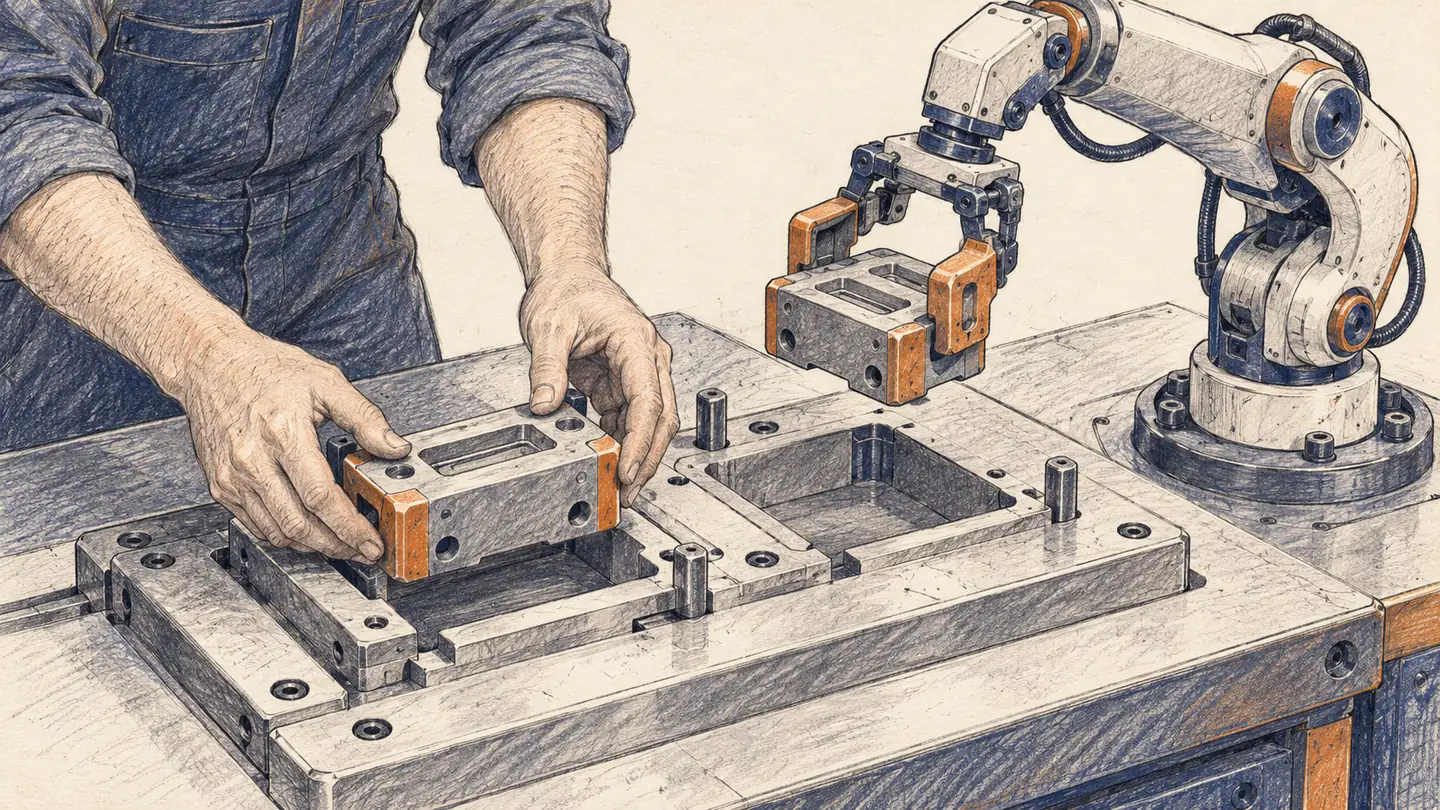
In the sales proposal, the robot is already working. On the factory floor, it still needs a job. Imagine the owner of a metal parts factory. Orders are coming in, deadlines overlap, experienced welders are working overtime. On his desk is a proposal for a robotic cell: consistent work, a shorter cycle, less repetition of strenuous tasks. At last, something that could ease the load on his people and let him accept the next order.
At the demonstration, everything runs smoothly. The part is ready and properly positioned; the path is set. The owner looks at the weld, then at the clock. In his head, he is already rearranging shifts. Behind him, an experienced welder is looking at the fixture holding the piece. He wants to know how it will accommodate the parts that come out of their own preparation area every morning.
This imagined purchase raises a real question about introducing robots: what happens to production and people when a machine takes over an action that, until yesterday, a skilled worker performed?
A faster machine changes the rhythm of the whole factory
In the first few days at our factory, the robot finishes its task before the next part reaches it. Now it waits for cutting, preparation and delivery. Welding has become faster, and the queue has moved a few metres upstream. For the first time, the owner sees how much the old arrangement depended on people who dealt with small irregularities along the way, fetched whatever was missing and adapted to delays.
The new machine’s output has to fit into that of the whole factory. Parts need preparing, work needs scheduling, and the finished joint needs checking. Suddenly, the return-on-investment calculation has more lines: fixtures, training, trial production time, maintenance and shift organisation. More completed movements become more delivered products only when the rest of the process can keep pace.
Humanoids, too, are taking on specific steps like these. In a June 2026 announcement, BMW described how Figure 02 positioned sheet-metal parts for welding in Spartanburg. The humanlike appearance catches the eye; what matters to the factory owner is that precise job between two stations. It lets him picture where the machine might fit and what would have to change around it.
The skilled worker knows what to ask
After several uneventful shifts, a batch of parts arrives that differs from the usual ones. In our imagined factory, work stops while the cause is investigated. The most experienced welder approaches the workstation. He checks the preparation and the way the part has been positioned. He shows a younger colleague where he would first look for the deviation, and why changing the settings without that inspection might merely conceal the problem.
In the proposal, the owner had seen a replacement for the movement of the welder’s hand. Now, standing before him is someone who understands a whole range of reasons why that movement succeeds. Some of that knowledge can carry over into planning the path, setting up the process and checking quality. In Fronius’s account of working with a cobot, the welder guides the torch by hand through points along the path, sets its position, then prepares the process on the controller. His experience helps determine what the machine will repeat.
That transition takes time and further training. Some people will want to work on preparation and setup, others will find their place in quality control, and an offer of a new role will mean little to someone who has not been prepared for it. If the owner plans to maintain the same production volume with fewer people, some employees may lose their jobs. Their wages, years in the trade and opportunity to learn something new are part of the modernisation story too.
That is why the staffing discussion begins while the proposal is still on the desk. Who moves to which task? Who gets training, how much time do they have for it, and how is their new knowledge valued? The answers determine whether an experienced worker takes part in the change or simply watches their previous role disappear.
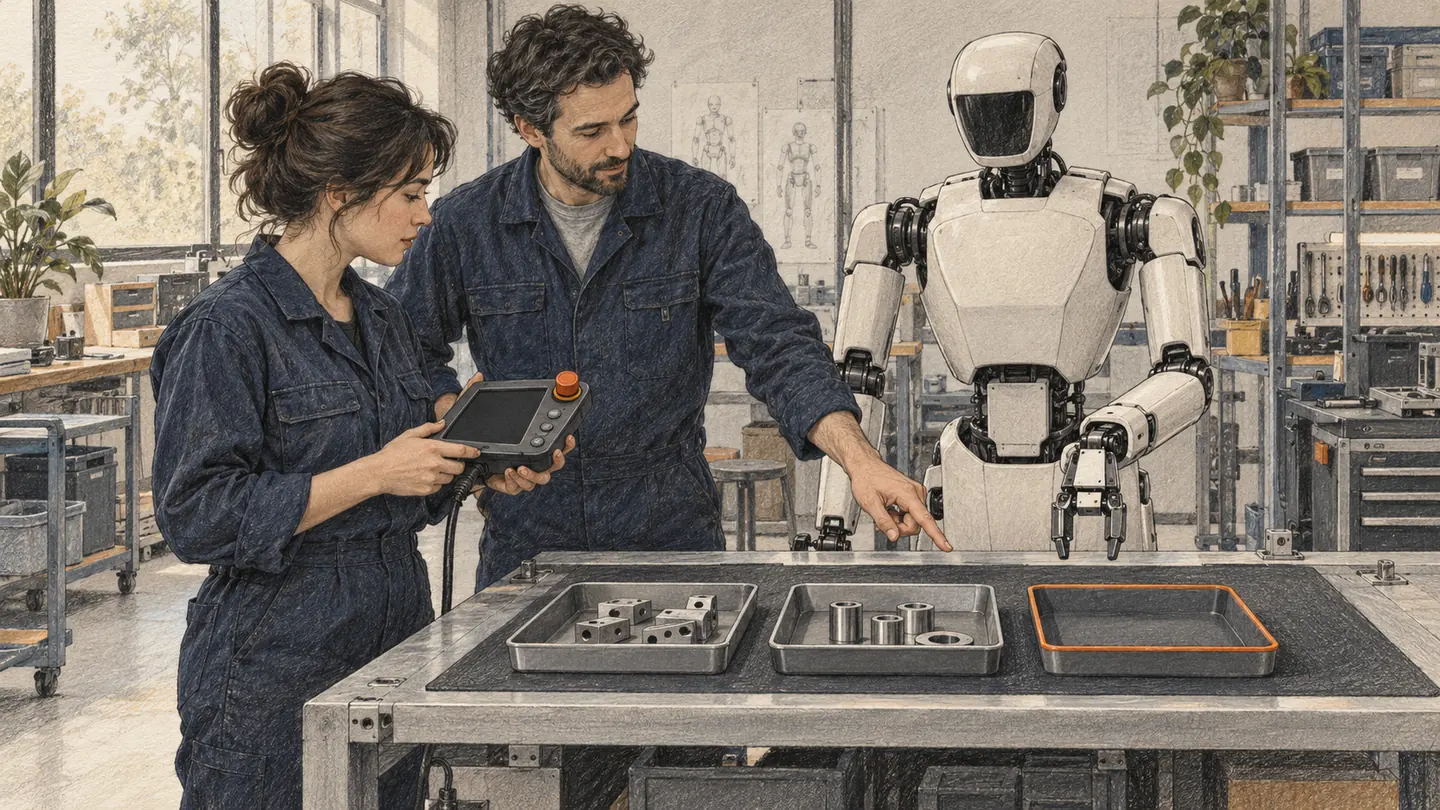
Five years later
Let us jump ahead a few years. The robot reliably repeats the established job. There are fewer people on the shift, and the most experienced welder has retired. The new operator knows how to start the program, replace a consumable and call for service. Then a different product arrives. The customer has changed the material or the joint geometry. The existing procedure needs to be reconsidered.
The company discovers that for years it has kept the program but neglected the people who understand why it was written that way. While everything stayed the same, the gap was barely visible. Now it waits for someone from outside to explain what needs changing. The owner has bought speed, but handed over some of the capacity to develop his own production process to the supplier.
This is where the real danger of losing expertise lies. When fewer people do a job every day, fewer gain experience through its small variations and mistakes. If training, checks and knowledge transfer also cease as work is automated, one skilled worker’s departure takes away much more than a position on the payroll. It also takes away a future teacher for someone yet to arrive.
The same story can continue differently. Over those years, the company has given the experienced welder time to prepare new tasks with younger colleagues, record the causes of deviations and take part in checks. New knowledge of the robot has built on an understanding of materials and processes. When a different product arrives, someone in the factory can define the problem, test a solution and explain what they need from the supplier. The benefit of automation then also shows in what people become capable of developing next.
Who will teach the next person?
That question connects this imagined factory with our earlier story “Šabac Builds Humanoids” (in Serbian). In the RTS report, supervisor Dejan Babić describes thirty days of training in Jiaxing, China, and overseeing the production process and correct assembly of components in Šabac. Knowledge follows a concrete route: someone goes, sees how the work is done, learns the procedure and returns to lead it. The next important question is whom they will pass that knowledge on to, and what that next person will be able to improve.
Let us bring the owner back to the desk where we began. Alongside the price of the cell, he now asks for a training plan, available support and an agreement on who is authorised and equipped to change the procedure. He puts time for learning into the work schedule. His calculation makes room for someone explaining the job, even if they have not produced a single part that hour.
The most interesting moment comes later, when a new part arrives for a trial. A younger colleague spots a deviation and can explain the change that is needed. The owner then sees what he has built alongside the machine he bought: a factory that can learn its next job.
A robot can repeat what we have mastered. The factory’s future also depends on who will be able to master what comes next.
This editorial story follows an imagined owner and welding factory. Their decisions, stoppages and later outcomes are used to explore how introducing robots affects production and knowledge. The factual reference points are BMW’s account of Figure 02’s task, Fronius’s description of preparing a cobot welding job and the RTS report from Šabac; checked on 3 November 2026.
Sources / Provenance
Editorial narrative analysis, 3 November 2026. The factory owner, purchase of the robotic cell, stoppages and two possible outcomes five years later are imagined. BMW, 25 June 2026: Figure 02 positions sheet-metal parts for welding; it is not described as performing the welding. Fronius, material for the Schweißen & Schneiden 2025 trade fair: the welder prepares the cobot's torch path and position. RTS, 3 September 2026: Dejan Babić describes thirty days of training in Jiaxing and oversight of the production process and component assembly in Šabac. The erosion or development of expertise is considered through organisational choices, without claiming either is an inevitable outcome of automation. The illustrations are conceptual AI scenes.