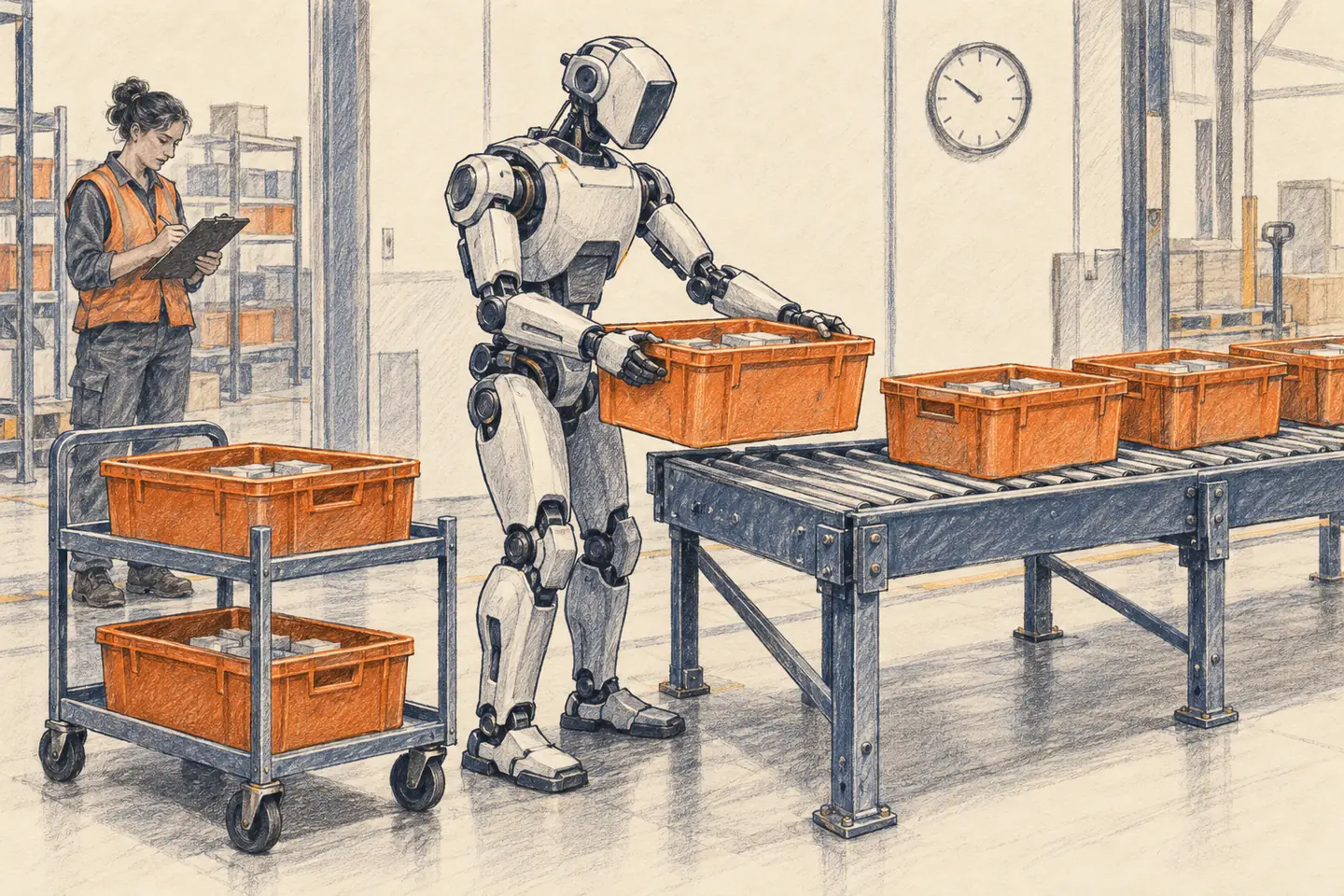
Imagine the end of a warehouse shift. A robot has been switched on for eight hours. It has moved boxes, waited for a new pallet, stopped in front of a trolley that had been moved, and called an operator several times. A presentation might describe this as eight hours of work. The person organising tomorrow’s shift will ask something more precise: how many deliveries were completed correctly, and how much work did we do to keep it working?
The robot has a job. Now it needs a record of its work.
That question matters increasingly as robots move out of laboratories and into regular operations. A video of a successful grasp shows that an action is possible. A warehouse, factory or service operation needs it to happen reliably enough for everyone else to plan their work around it.
Worken tries to count the work
On 29 October in Shanghai, AGIBOT introduced Worken, a name combining work and token. The company describes it as a proposal for measuring effective intelligent working hours. Its formula combines the number of active robots, their autonomous operating time, and their performance relative to a reference for a particular task. [1]
All three terms matter: active, autonomous and performance. AGIBOT distinguishes robots in use from manufactured units held in stock, autonomous operation from total time switched on, and performance in terms of an acceptable result against a task reference. [1] How those boundaries are recorded during an actual shift will determine the value of the resulting number.
This is a useful shift in the conversation. Two companies can have the same number of robots and very different amounts of completed work. One may use its machines in an established process; the other may still be gathering data, training them and resolving exceptions. Both activities make sense, but they answer different questions.
For now, Worken is AGIBOT’s proposal, which the company intends to develop through practical applications. Its usefulness as a broader industry measure remains to be tested. [1]
Why the situation matters too
Back to the box. Grasping it is only part of the task. The box may already have been moved, the shelf may be full, or the delivery sequence may have changed. The robot then needs to adapt its actions to what it finds.
On 22 October, AGIBOT released the fourth part of its AGIBOT WORLD 2026 dataset, devoted to physical reasoning. The same goal appears in different states and under different constraints. Attention moves from the difficulty of grasping itself to deciding what to do, in what order, and whether the goal has already been achieved. Both successful and unsuccessful attempts were recorded. [2]
This dataset supports capability development. Its choice of tasks reveals how much attention everyday situations demand: a moved box or a full shelf changes what the robot should do next.
The factory becomes a classroom
A similar direction can be seen with Atlas. On 21 September, Boston Dynamics opened its Robotics Metaplant Application Center within Hyundai’s factory complex in Georgia. Robots train there for actual production workflows, including preparing and arranging automotive parts for assembly. The centre is operating; expanding the training and facility remains a next step. [3]
Such an environment lets skills develop around real objects and process requirements. Training prepares a robot for a shift; data from the shift itself will show how reliable and productive it has become.
A number needs an explanation
A proposal such as Worken can improve the question we ask the industry. Alongside the number of machines delivered, we begin to look at what they have done. A formula’s result becomes meaningful when we know how its components were recorded.
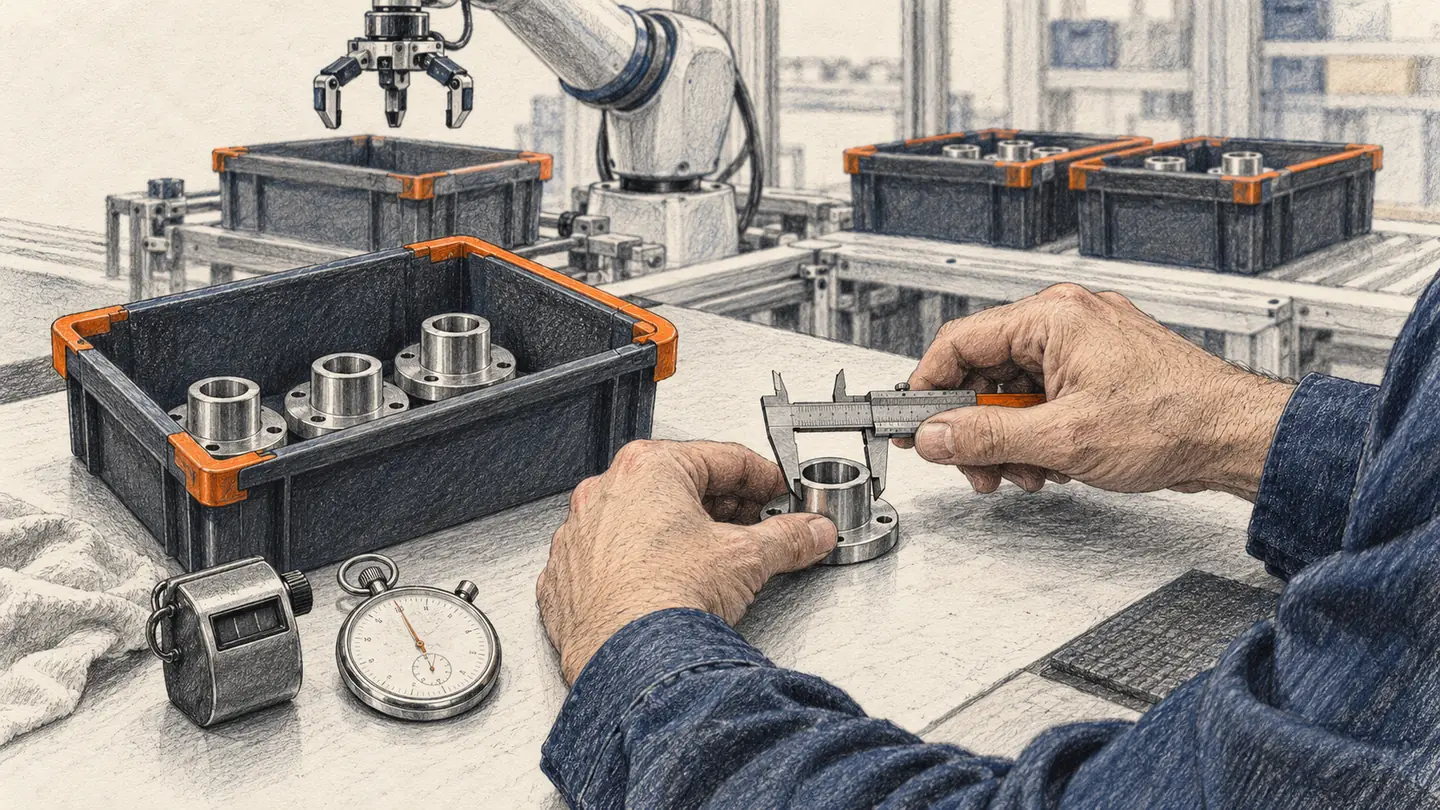
An “autonomous hour” is therefore worth reading alongside operator interventions, repeated attempts and human repairs. Conditions matter too: a carefully prepared shelf calls for different work from a space through which people are constantly passing. A clear definition of an acceptable result allows us to compare those shifts.
A practical shift report would therefore show the amount of completed work alongside human support time, stoppages, quality and safety incidents. Energy, maintenance and training belong in the calculation too. Buyers can then see what a useful action costs, while employees can see whether their day has become easier.
Useful output also depends on whom the assistance is for. In a factory, a repeated action makes sense when a part reaches the right place at the right time. At home, success may look quite different: a person chose a cup, received it safely and could carry on with their day. Speed is only one quality of that help.
A humanoid and a small trolley can each do their part well. Shape matters where it enables access to a space, an object or a user. Describing the particular job helps us choose the appropriate machine.
What becomes possible for people
The most interesting signal this October is this change in what is measured. The industry is looking for ways to make robots work longer, respond better to situations and fit more easily into a process. A manufacturer’s proposed measure, new training data and factory training are different parts of that effort.
For people working alongside a robot, the change shows up during the shift: less carrying or waiting, more time for a complex task or for another person. That is an outcome worth recording alongside the number of completed actions.
At the end of the shift, a very human question remains: what can we now do with that help?
Sources
- AGIBOT — the Worken proposal, 29 October 2026
- AGIBOT WORLD — Release 4, 22 October 2026
- Boston Dynamics — opening of RMAC, 21 September 2026
Sources / Provenance
Sources checked on 31 October 2026. The Worken proposal and dataset are described according to AGIBOT, and the training centre according to Boston Dynamics. The opening shift is an imagined example; the connections between cases and discussion of work quality are editorial interpretation.