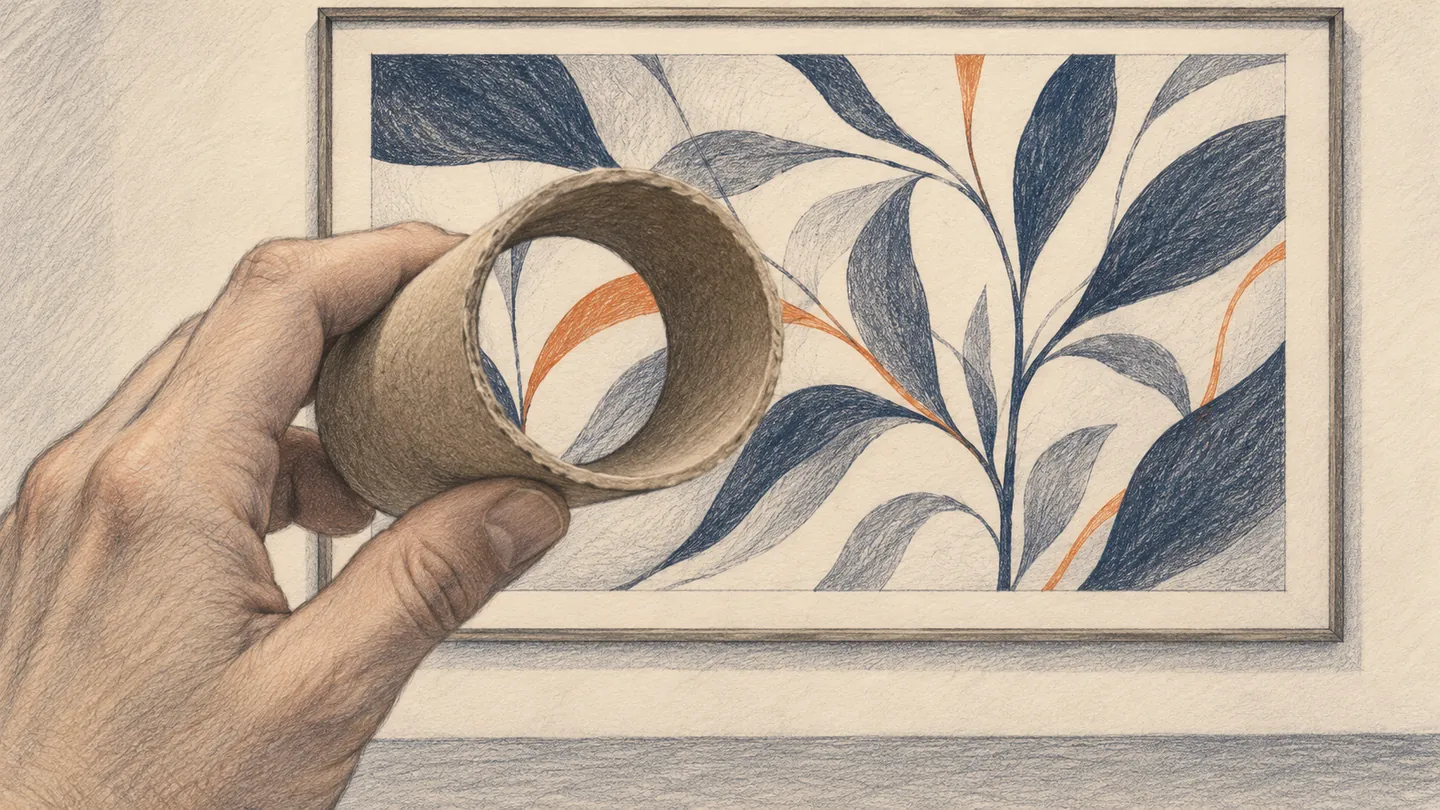
Our days teach us to recognise a scene quickly and move on. We read a message, take in a picture, check the time; the next obligation is already calling. In front of a work of art, we can easily keep the same pace: we have seen what it depicts, we can move on. Then a small trace of paint catches our eye.
Let’s stay there. In an area the size of a fingernail, one brushstroke may end while another shows through beneath it. Here the paint has gathered along an edge; there it has spread into a thin, transparent layer. Seen apart from the whole composition, this small scene opens a story of its own.
What happened here? Which way did the paint travel while it was still wet? Was the next layer applied over a dry one, or did the colours meet before they dried? What was covered, and what was left visible? Our eyes follow the surface as a trace of work being done.
Here, material meets human choice: the painting surface, the pigment, the binder that holds particles of colour in place, then the thickness of the paint and the direction of the stroke. Someone chose this particular combination, applied it, moved it or left it alone. There was time between the strokes, too — for drying, looking, continuing. In the finished painting, that time has gathered in one place.
A simple way into this kind of looking comes from an exercise at Gallery A3 in Amherst: a few minutes with a chosen work, a cardboard tube to isolate a detail, then a pencil and a conversation. We could try it at the next exhibition.
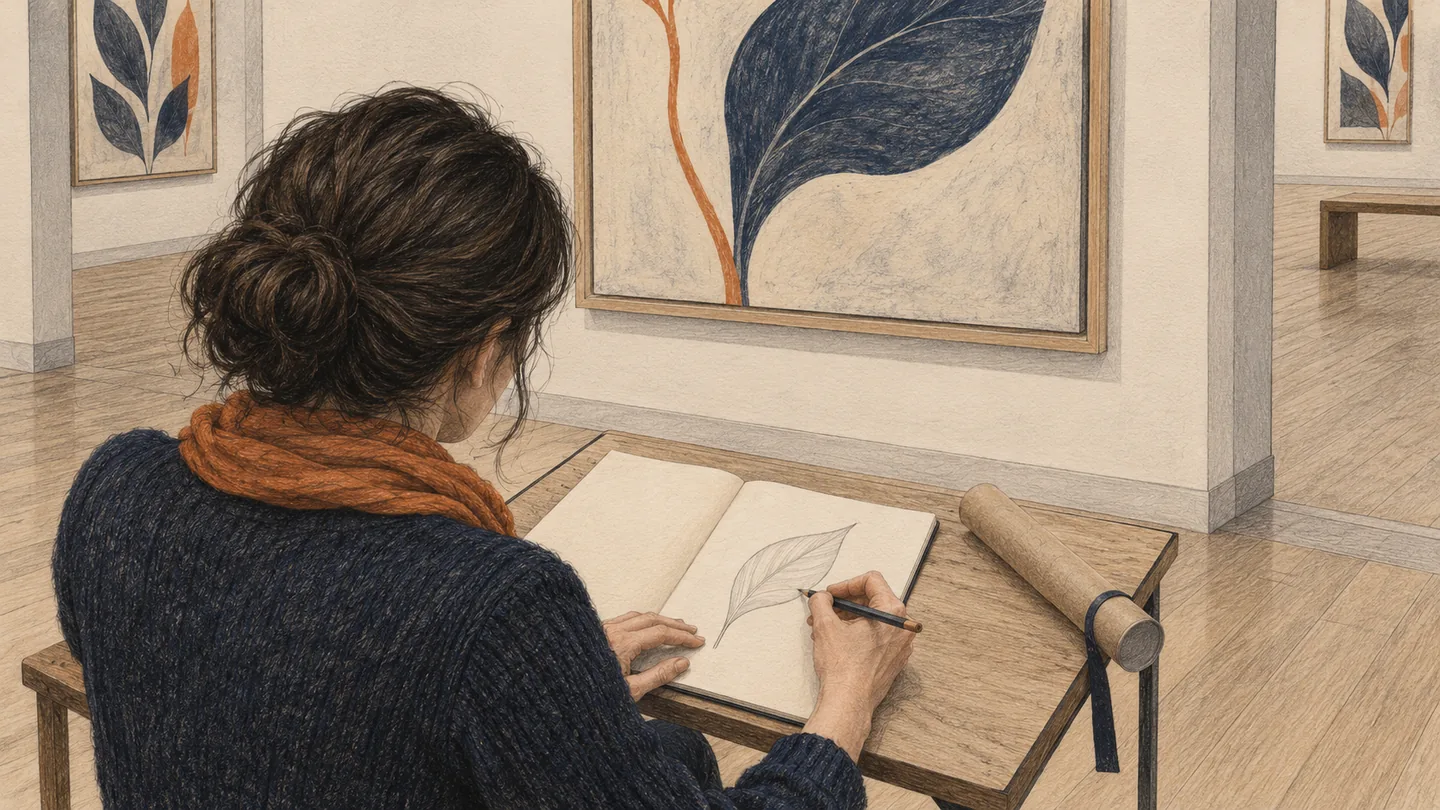
As we follow an edge with a pencil, it becomes easier to notice where it breaks or changes direction. Someone beside us sees something else in the same detail and brings us back for another look. A question about a painting becomes an encounter: with the person looking alongside us, and with the work of someone who may be long gone.
In a passing world where people and materials alike have their span, that chosen combination of colours still has an effect. Someone’s time has become a trace that now enters our day. We only need to pause before it. Five minutes of our lives with a few centimetres of someone else’s presence.
Sources / Provenance
The practice of slow looking, isolating details with a cardboard tube, drawing and conversation is described in the Slow Art Day report of 26 September 2026 about the programme held at Gallery A3 in Amherst on 11 April 2026. The source was checked again on 3 November 2026. The editorial reflection on materials, the process of making and the human trace grew from the author’s insight. The illustrations depict an imagined gallery and artworks.