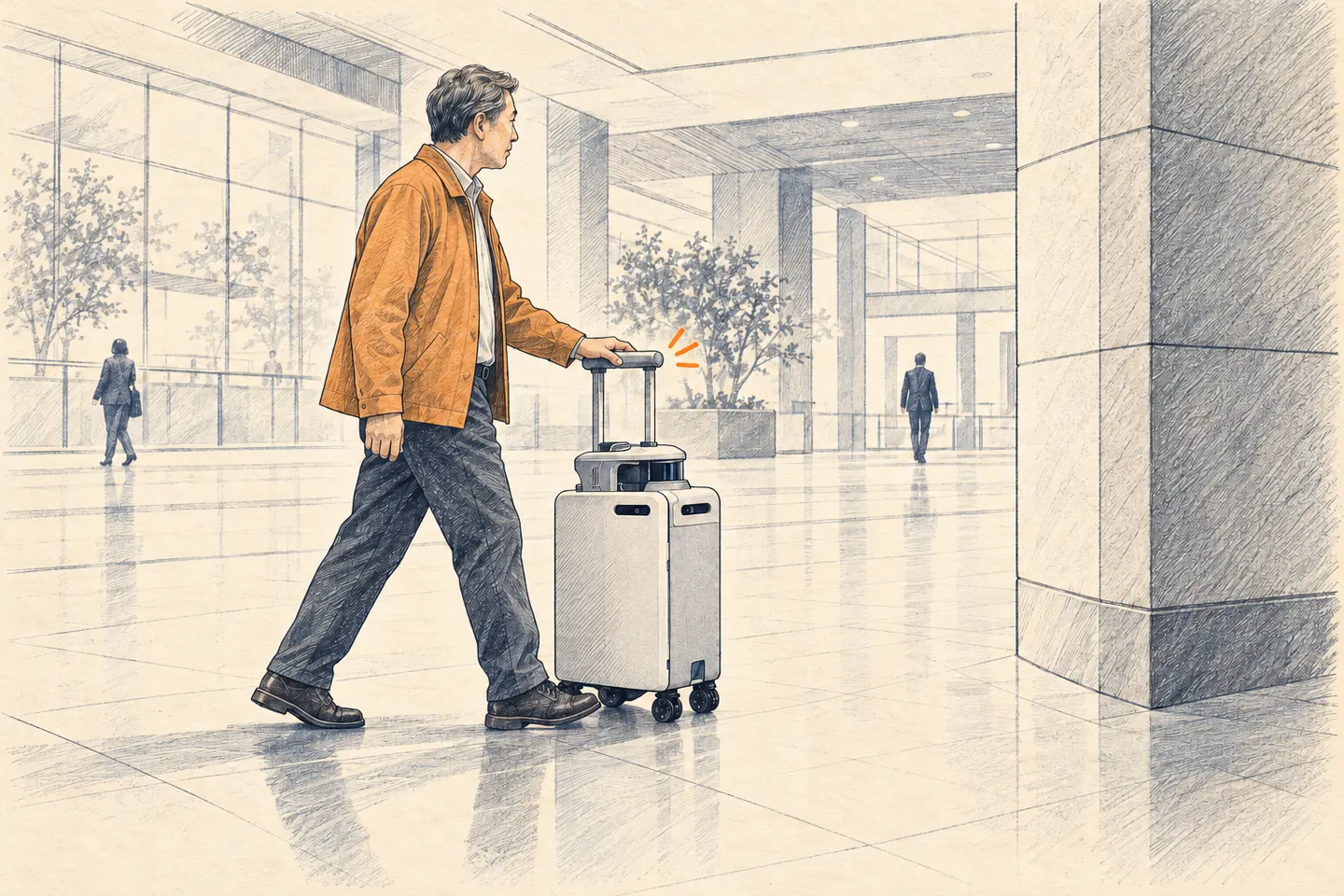
In an unfamiliar building, the hardest part can be something others find simple: finding the way through. AI Suitcase offers blind and partially sighted people tangible help in a prepared space — choose a destination, take the handle and the robot guides you. But using it begins with an earlier question: how do you get to that handle?
From the pickup point to the walk
At Tokyo’s Miraikan museum, visitors first make their way to a station on the third floor, beside the information desk. People with sight loss can book a session in advance by phone. After an introduction to using the device, they choose a tour or several exhibits from the available destinations. The walk begins and ends at the same station. [1]
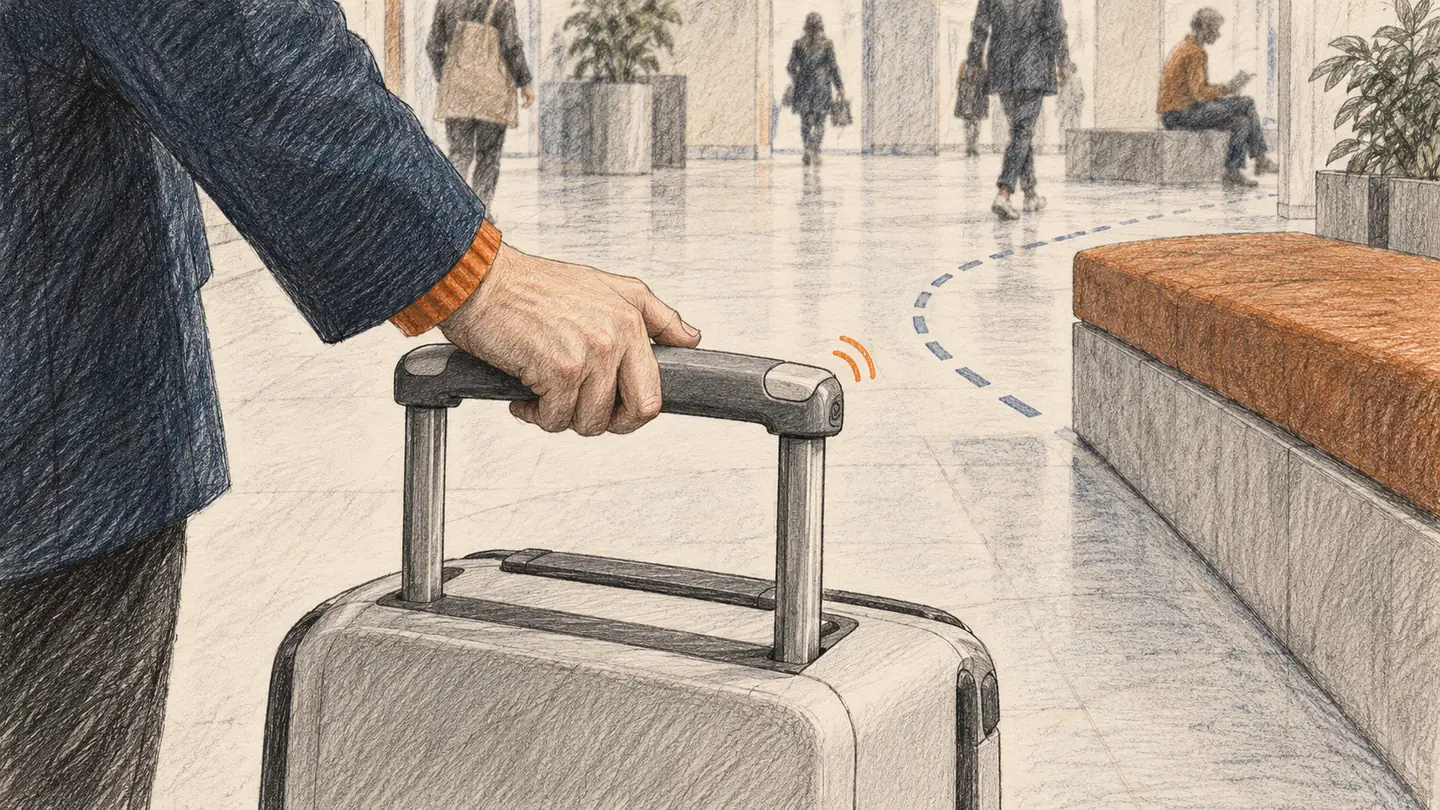
The destination is set through a dedicated app, by touch or voice. Holding the handle allows the device to move; letting go stops it, while vibrations on the left or right signal a turn. A laser sensor and depth cameras read the surroundings; comparison with previously recorded information about the space establishes its position, while AI recognises people and their movements. The computer chooses a path around obstacles. The user adjusts the speed with buttons on the handle.
The idea grew out of the travel experiences of Chieko Asakawa, a blind researcher who began developing it in 2017. A familiar suitcase became a means of physically guiding someone through a space. [1]
During October 2026, visitors could also try the device at the Toranomon Hills complex: around ten minutes without booking, or roughly an hour on a reserved tour through several parts of the complex. That pilot ended on 31 October. Bookings were taken at the reception point, by email or by phone. [2]
Our view: who guides you to the guide?
Within a museum, this already makes sense: a person can gain more freedom to choose which exhibits to explore and at what pace. Relying on the same assistance while travelling means connecting a few more steps. Where do you collect the device? How do you reach it from the entrance or platform? Who helps if the route is closed, the battery is flat or the device is already in use?
The official descriptions explain an app for setting destinations; we found no confirmation in them of a network of available suitcases that a traveller can search and book. At a station or airport, such a service would need a clear collection process, up-to-date routes and support that can take over when the robot stops.
What matters to the traveller is knowing before setting out where assistance begins, how far it extends and what to do when something goes wrong. Then the suitcase becomes part of the travel plan.
Sources
Sources / Provenance
Checked on 3 November 2026: Miraikan — controls, registration at the station, telephone reservations and the development of AI Suitcase; Toranomon Hills — the pilot programme of 1–31 October 2026, marked as concluded. The official descriptions reviewed did not confirm an app for locating and booking devices across a network of locations. The discussion of collection, availability, routes and support is an editorial assessment of the conditions needed for an everyday service.