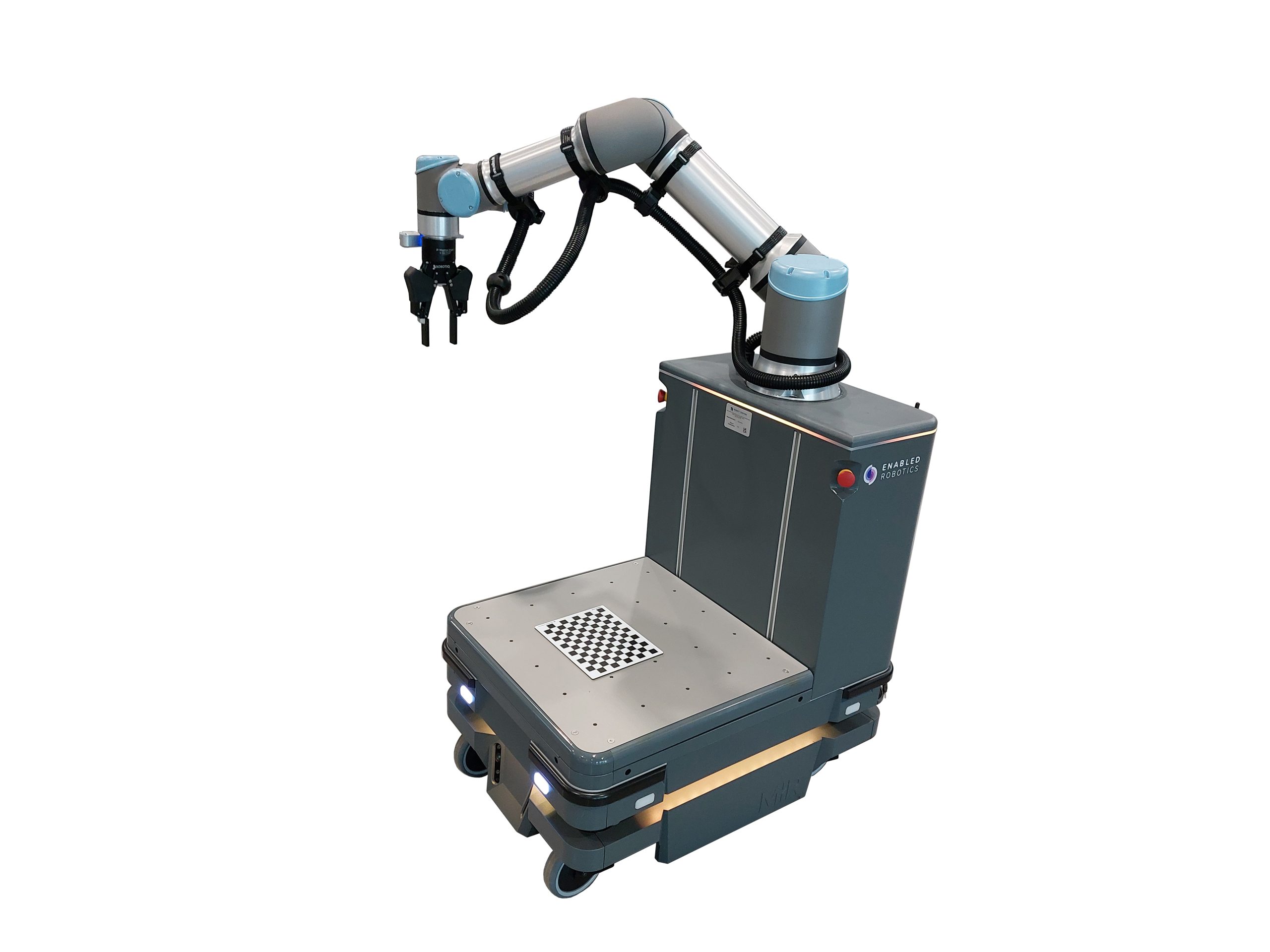
The public image of robotics is still dominated by the stage. A humanoid waves, dances, boxes, folds a shirt or walks through a carefully prepared room. The clip travels because the machine resembles us closely enough to produce surprise. But resemblance is a weak measure of usefulness.
A showbot is not a robot for show. It is a star robot that shows up and does the job: show and do.
The more important robots are often found elsewhere: under a pallet, beside a hospital corridor, inside an elevator, between a tote and a conveyor, or at the edge of a kitchen counter. They do not need applause. They need to become dependable participants in systems built around human limits, attention and responsibility.
This is not an argument against humanoid robots. It is an argument against using the human silhouette as a substitute for evidence. The useful distinction is not humanoid versus non-humanoid. It is spectacle versus participation.
A robot earns its place when the system around it becomes less wasteful, less exhausting and more capable—not when the demonstration becomes more dramatic.
The wrong dividing line
Robotics is frequently narrated as a contest over form. Will the winning machine have two legs? Wheels? A single arm? Two arms? The question is visually irresistible and operationally incomplete.
A human environment does create a strong case for human-compatible geometry. Doors, stairs, shelves, handles and workstations were designed for our bodies. But compatibility can be achieved in several ways. A wheeled base can use an elevator. Two low platforms can enter beneath a pallet. A compact arm can reach from the floor to a counter. A biped can work in a tote-handling line without requiring the entire facility to be rebuilt.
The relevant unit is therefore not the robot alone. It is the relationship between the robot, the task, the space and the people who remain responsible for the outcome. Five current cases make that clearer than another general promise about an automated future.
FILICS: engineering around the room that already exists
The FILICS Streamliner approaches pallet movement by refusing the familiar shape of the vehicle. Instead of bringing a forklift body and its turning radius into the aisle, the system uses two ultra-flat autonomous runners. They enter beneath a load carrier from opposite sides, coordinate, lift and move the pallet.
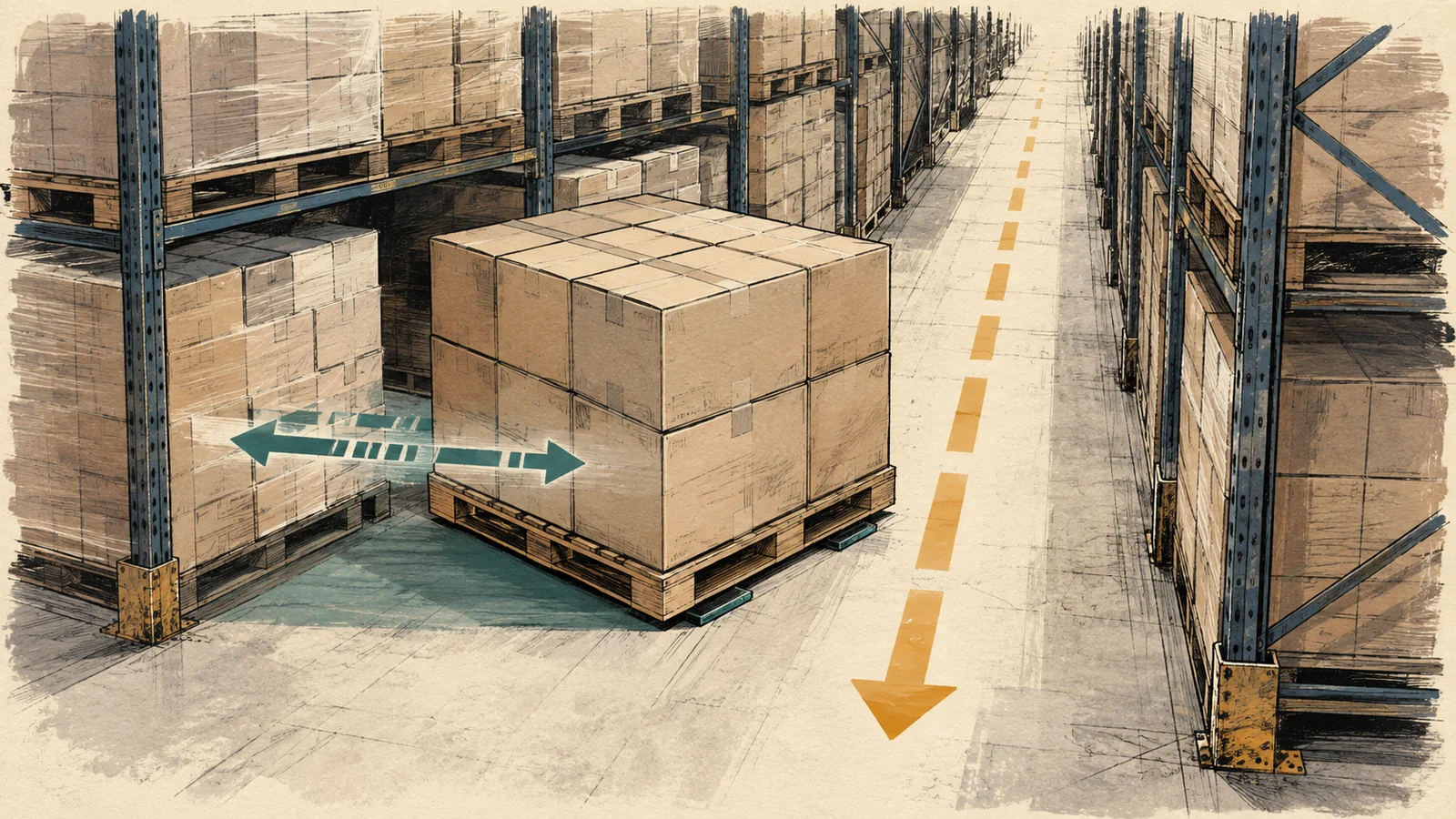
The design matters because it begins with spatial friction. Warehouses are full of expensive negative space: turning circles, safety clearances and lanes reserved for vehicles larger than the object they move. FILICS asks whether the transport machine can shrink toward the geometry of the pallet itself. Its current product material specifies payloads of up to 800 kilograms and describes operation with established load carriers, including Euro pallets.
Public material also shows a path from demonstration toward customer-side evaluation and implementation. That is encouraging, but it is not the same as a published, independently audited productivity result. The responsible reading is precise: the architecture is strong, the problem is real, and the deployment trail is meaningful; public quantitative proof remains limited.
This boundary does not weaken the case. It improves it. Humanophilic robotics requires us to distinguish an elegant machine from verified systemic benefit.
Stretch: simplicity as a capability
Hello Robot’s Stretch is deliberately unlike the cinematic domestic android. It is compact, mobile and built around a single slender arm. The latest platform can navigate a home-scale environment, reach from near the floor to a countertop and support modern perception and manipulation research without pretending that general domestic autonomy has already arrived.
Its significance lies partly in what it makes possible for other people. Researchers, developers, occupational specialists and users can work on assistive behaviours around an accessible, open platform. Hello Robot explicitly frames assistive care as a north star while also stating the present boundary: the system is still a research platform, not a finished consumer appliance for individual purchase.
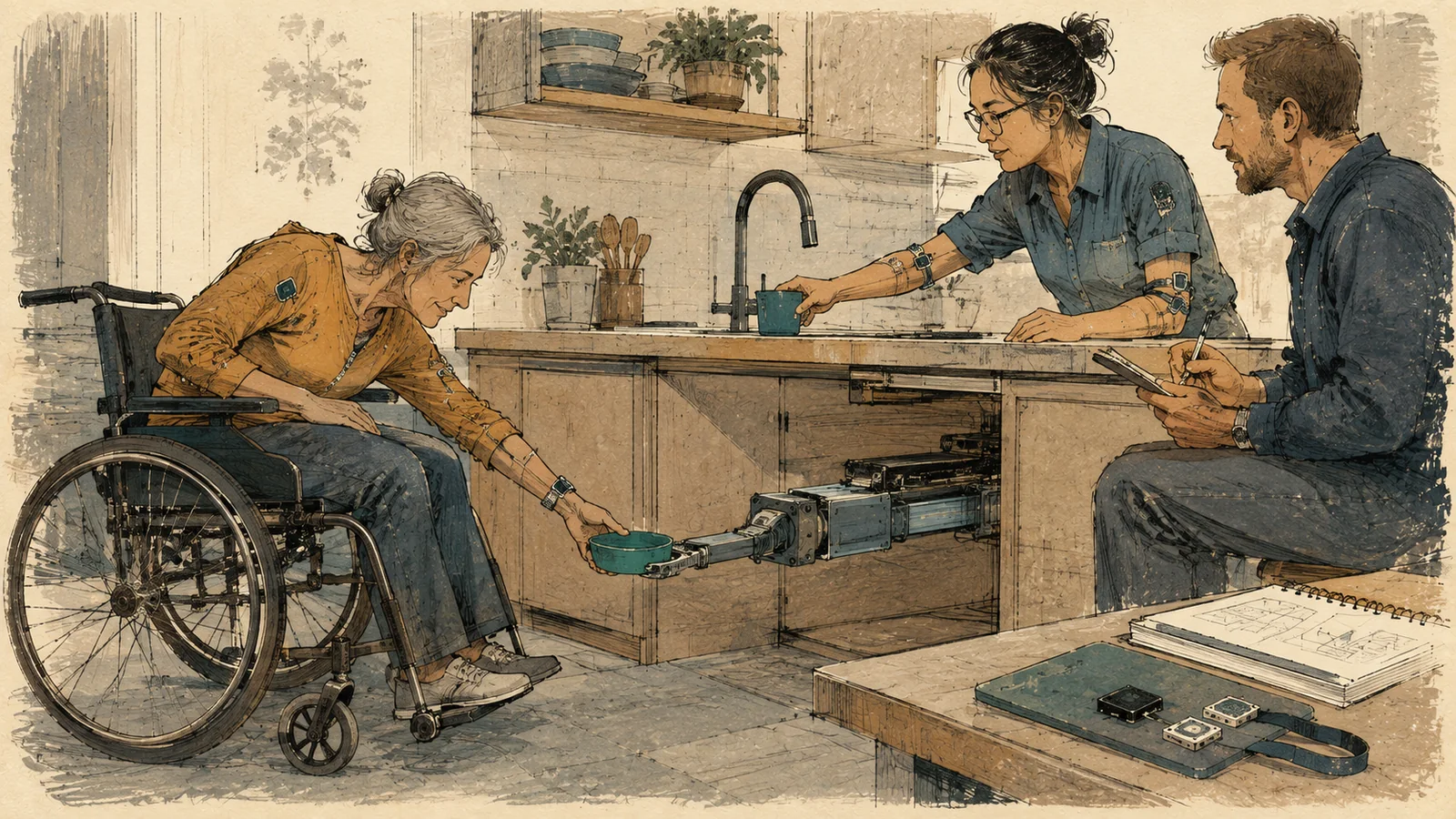
That distinction is central. Assistance is not created by adding a friendly face to a machine. It is created by matching reach, mobility, sensing, interfaces and human supervision to an actual need. A less theatrical body can become more useful precisely because it is easier to understand, modify and place in a real room.
Moxi: returning attention to care
In a hospital, the scarce resource is not only time. It is undivided human attention. Every routine trip to move supplies, specimens or equipment competes with work that requires judgment, empathy and clinical responsibility.
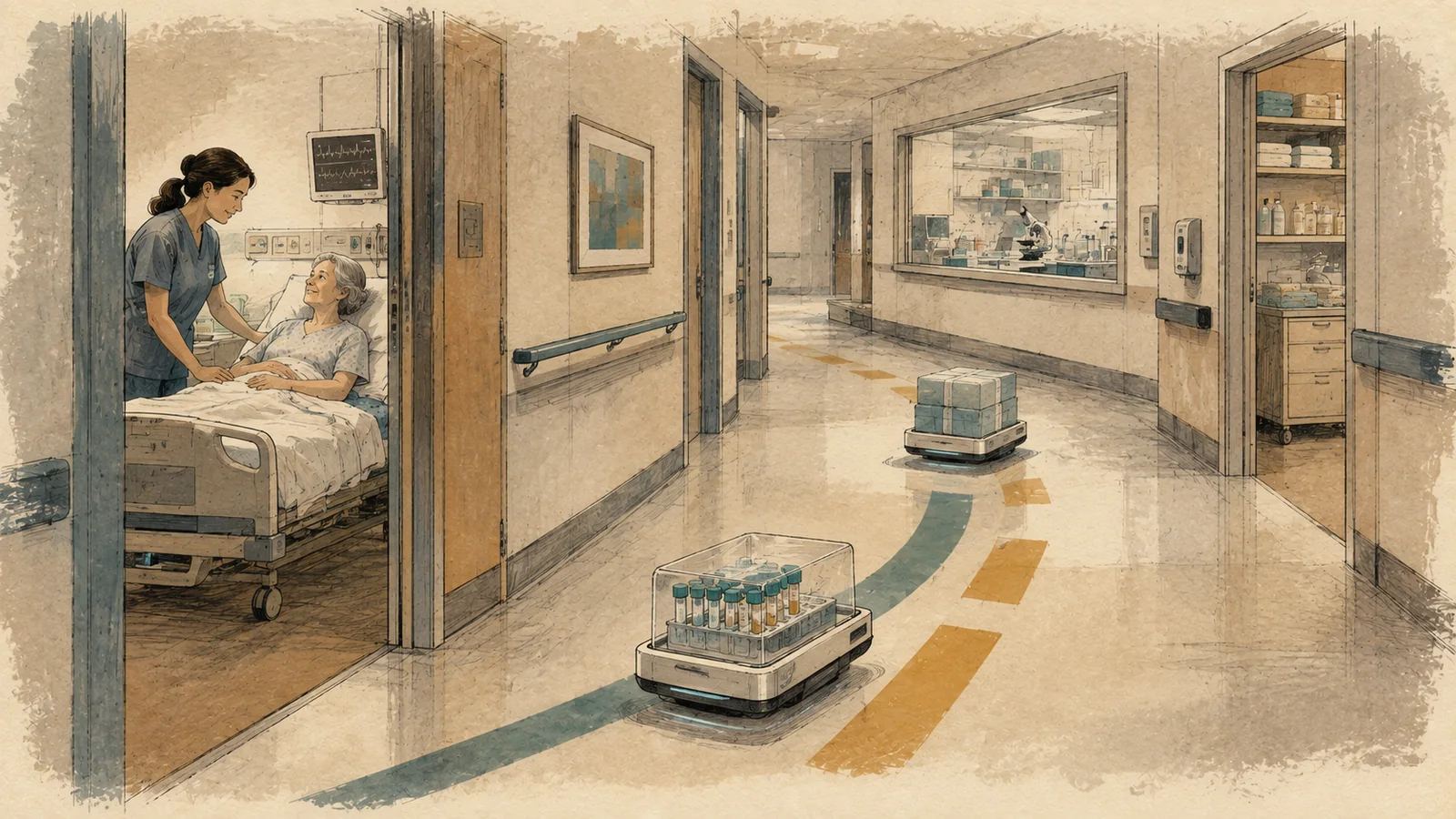
Diligent Robotics designed Moxi for that logistical layer. The robot navigates hospital corridors and performs non-patient-facing delivery work rather than presenting itself as an artificial nurse. The company is now rolling out Moxi 2.0 across health-system customers, with changes aimed at greater payload capacity, reach and navigation in busy clinical spaces.
Vendor case studies report substantial numbers of deliveries and staff hours redirected toward higher-value work. Those figures should be read as deployment evidence reported by the supplier and participating institutions, not as a universal law for every hospital. The stronger claim does not require a dramatic statistic: a hospital robot can be valuable when it takes custody of predictable movement and gives human attention back to care.
This is a useful test for automation in general. The question is not simply whether a machine replaces a task. It is what kind of human capacity becomes available when the task is transferred.
MiR: the robot that disappears into the workflow
The deployment of Mobile Industrial Robots at Blum-Novotest offers a different kind of evidence. The visible machines are only part of the project. Doors, gates, an elevator, fleet management, safety acceptance and the production schedule all had to behave as one coordinated system.
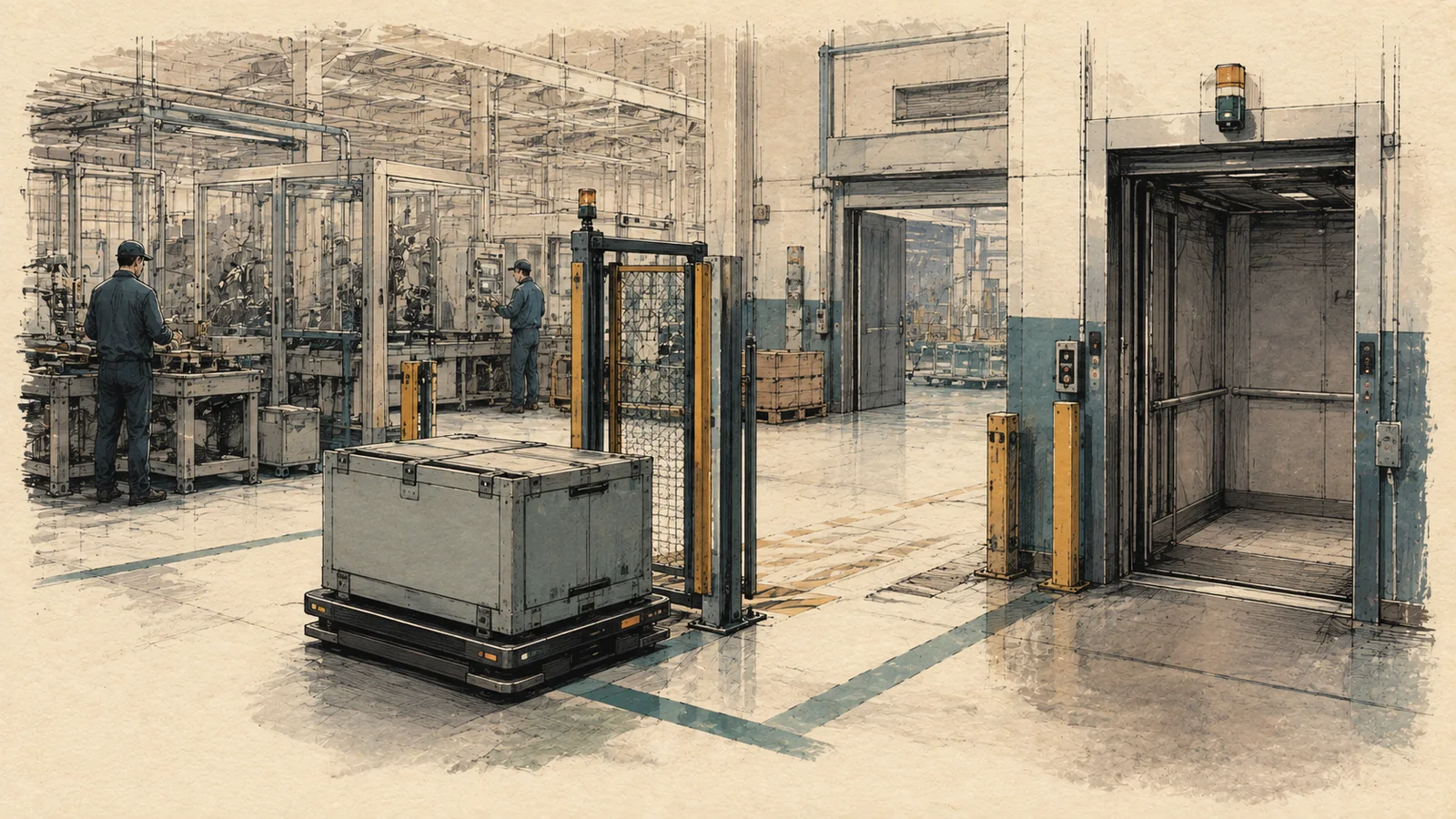
According to the case published by integrator SPIE Automation, the MiR fleet now handles about 90 percent of the company’s intralogistics processes. The same account says the automated system avoids more than 1,200 kilometres of manual transport travel each year. The value is not a single spectacular action. It is repeated, uneventful movement across levels and between processes.
This is what mature robotics often looks like: the robot gradually disappears into the grammar of the workplace. It becomes infrastructure. The achievement is not that everyone stops to watch it, but that the right material arrives and people no longer have to spend part of the day pushing it there.
Digit: the difficult boundary case
Agility Robotics’ Digit is useful because it prevents the argument from becoming too comfortable. Digit is recognisably humanoid: it has two legs, two arms and a form chosen to work in spaces organised for people. It also has a real commercial workflow.
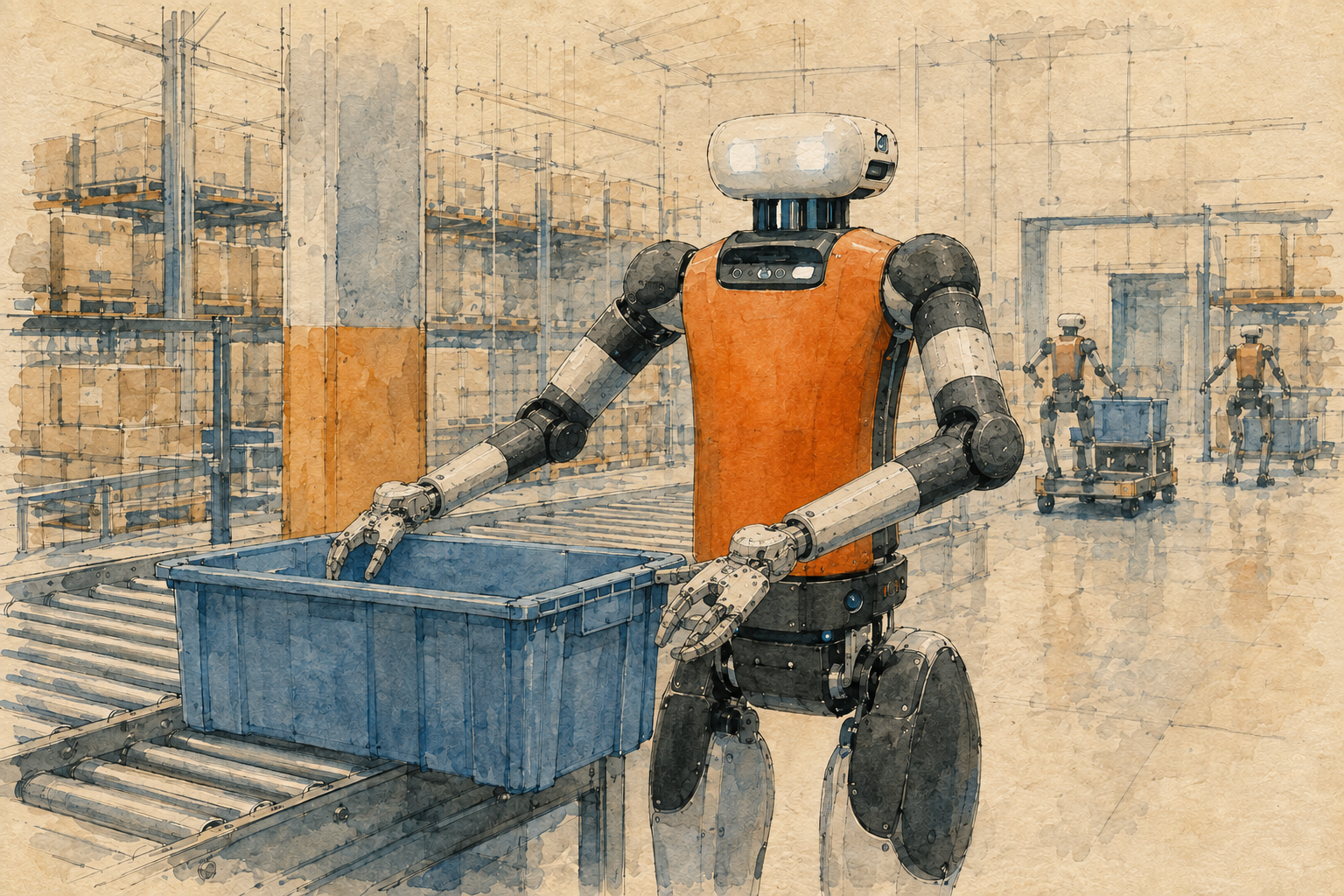
GXO announced a multi-year deployment in which Digit moves totes from collaborative robots to conveyors at its Flowery Branch facility in Georgia. Agility later reported that the fleet had moved more than 100,000 totes. The milestone is significant, but its evidentiary boundary should travel with it: the count is vendor-reported, and the public announcement does not disclose every denominator needed for a full productivity comparison, including the exact active fleet size and operating-time basis.
Digit therefore belongs neither in the hype bin nor in the victory parade. It is a credible case of humanoid geometry serving a bounded task inside an existing logistics system. What matters is not that the robot looks human. What matters is that its body lets it join a process without demanding a completely new building around it.
Collaboration is engineered, not declared
The word collaborative is often treated as though it were an inherent personality trait. In practice, collaboration is produced by engineering, integration and governance.
The safety guidance surrounding collaborative robot systems makes this explicit. A machine may include force limits, monitored stops and other protective functions, but the complete application still requires a risk assessment. The gripper, payload, speed, workspace and foreseeable human contact all change the risk. Safety belongs to the deployed system, not to the adjective attached to the robot.
The same principle applies beyond physical safety. A hospital needs escalation procedures when a robot is blocked. A warehouse needs traffic rules and recovery paths. An assistive system needs privacy boundaries and a clear account of who remains responsible. A robot becomes human-compatible through these relations.
What deserves recognition
The robots that deserve our attention are not necessarily the ones that most convincingly imitate a person. They are the ones that enter a human system without making the human more peripheral.
FILICS compresses the vehicle toward the load. Stretch makes a modest body available for serious assistive research. Moxi protects attention from logistical erosion. MiR turns repetitive movement into infrastructure. Digit shows that a humanoid form can be justified when it solves a concrete compatibility problem.
None of these cases completes the story. Some evidence is supplied by vendors. Some deployments remain early. Some benefits are easier to describe than to compare. Keeping those limits visible is part of the work.
Humanophilic robotics is not robotics that smiles at us. It is robotics that changes the distribution of effort without erasing the people, spaces and responsibilities that give the work meaning. The future will not be decided on the brightest stage. It will be decided in the ordinary room, after the audience has left.
Sources / Evidence
- Featured image: ER-FLEX mobile manipulator — Auledas / Wikimedia Commons — CC BY 4.0
- FILICS Streamliner — official product information
- Hello Robot — Stretch 4
- Hello Robot — Assistive Care
- Diligent Robotics — Moxi 2.0 rollout
- SPIE Automation — MiR fleet at Blum-Novotest
- GXO — multi-year commercial deployment of Digit
- Agility Robotics — 100,000-tote milestone
- Universal Robots — safety FAQ and application-level risk assessment

Evidence note
Claims are attributed to the organisation that published them. Supplier and integrator case studies are treated as deployment evidence, not independent comparative proof. Where public denominators or audited productivity data are unavailable, that limit is stated in the text.
Sources / Provenance
Research dossier: September 2026 — Humanophilic Robotics — Deep Research Dossier (2026-08-29). Key public sources: FILICS; Hello Robot; Diligent Robotics; SPIE Automation / Blum-Novotest; GXO; Agility Robotics; Universal Robots. Vendor-reported claims are identified in the article.