FUTUREVIEW 2058
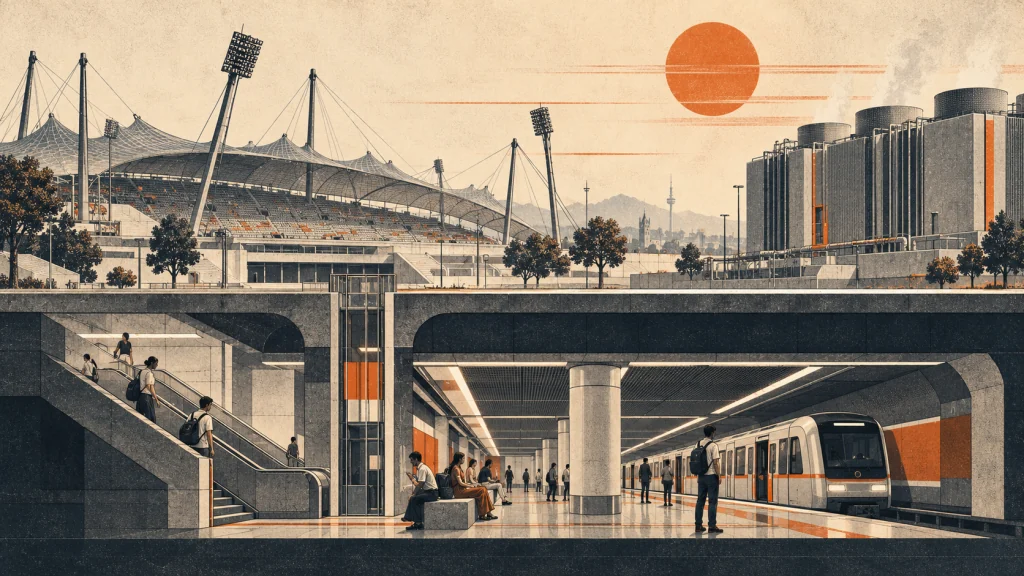
MUNICH, OCTOBER 2058 — The Summer Robot Olympics began on Monday—for the third time in October.
The change of date was introduced after the city’s network of data centres released more heat into the air during two consecutive July seasons than the district-heating system produced over an entire winter. Summer operations at surface level were shifted to night mode, while part of the population now spends the daylight hours in air-conditioned underground stations.
The Organising Committee retained the word “summer” for brand continuity. The overlap with Oktoberfest was not declared a logistical incident. The city stated that the two events attract different forms of endurance.
Competition Without Downtime
Every registered athlete was a robot. Since 2052, the same has been true of most service crews.
During the 100-metre qualifiers, the Dutch competitor’s left-knee actuator failed. Two mobile service units replaced the assembly in 11.8 seconds. A third checked the firmware signature, serial number and sporting identity. The competitor returned to the track before the control system registered an interruption to the programme.
There were no raised voices in the service zone, no wrong tools and no questions about whether the machine could manage just one more shift. Spare parts arrived on autonomous trolleys, diagnostics were complete before the athlete stopped, and repair requests were closed without a conversation.
The human remained in the fire-monitoring room, behind glass. The rulebook required a human presence, but not wakefulness.
The Audience, Elsewhere
The system ran without interruption. The stands did not.
By midday, the official app reported 87 per cent occupancy. The figure was accurate: that proportion of accredited wristbands had passed through the entrance at least once. Most of their owners then continued towards the beer tents.
The first to leave were innovation executives, partnership-programme managers and the sales teams of technology companies. Their meetings in the corporate box had been moved to Oktoberfest because, according to an internal notice, it offered more room for direct exchange.
The broadcast switched to tight shots. Cameras followed robot faces, finish lines and sponsor marks. A wide shot was used once, during the test signal, and was not repeated.
The organisers stated that the audience was not absent, but “distributed across the wider urban area”. The system continued to record it as present, while the public-address system reproduced the prescribed levels of applause.
Husenoid Bolt Honours His Contract
Husenoid Bolt, the former champion of Surčin 2046, did nevertheless appear on the track.
His series had been retired from elite sport six years earlier. Replacement batteries were produced only to order, the cooling system no longer met the recommended competition standard, and the right ankle lagged three milliseconds behind the rest of the body.
The appearance could not be cancelled. Four sponsorship contracts required at least seven seconds of frontal logo visibility and one full stride at competition speed. A replacement robot was not accepted: the contract specified the appearance of the named competitor, not his substitute.
Bolt was not timed under the rules of Surčin 2046. In the robot veterans’ category, the result was now determined by the number of original parts that crossed the finish line together with the competitor.
Bolt entered lane six with new stickers on his chest, thighs and both forearm panels. At 71 metres, the thermal warning changed from green to yellow. The sponsorship module confirmed that the broadcast was still live. Bolt did not slow down.
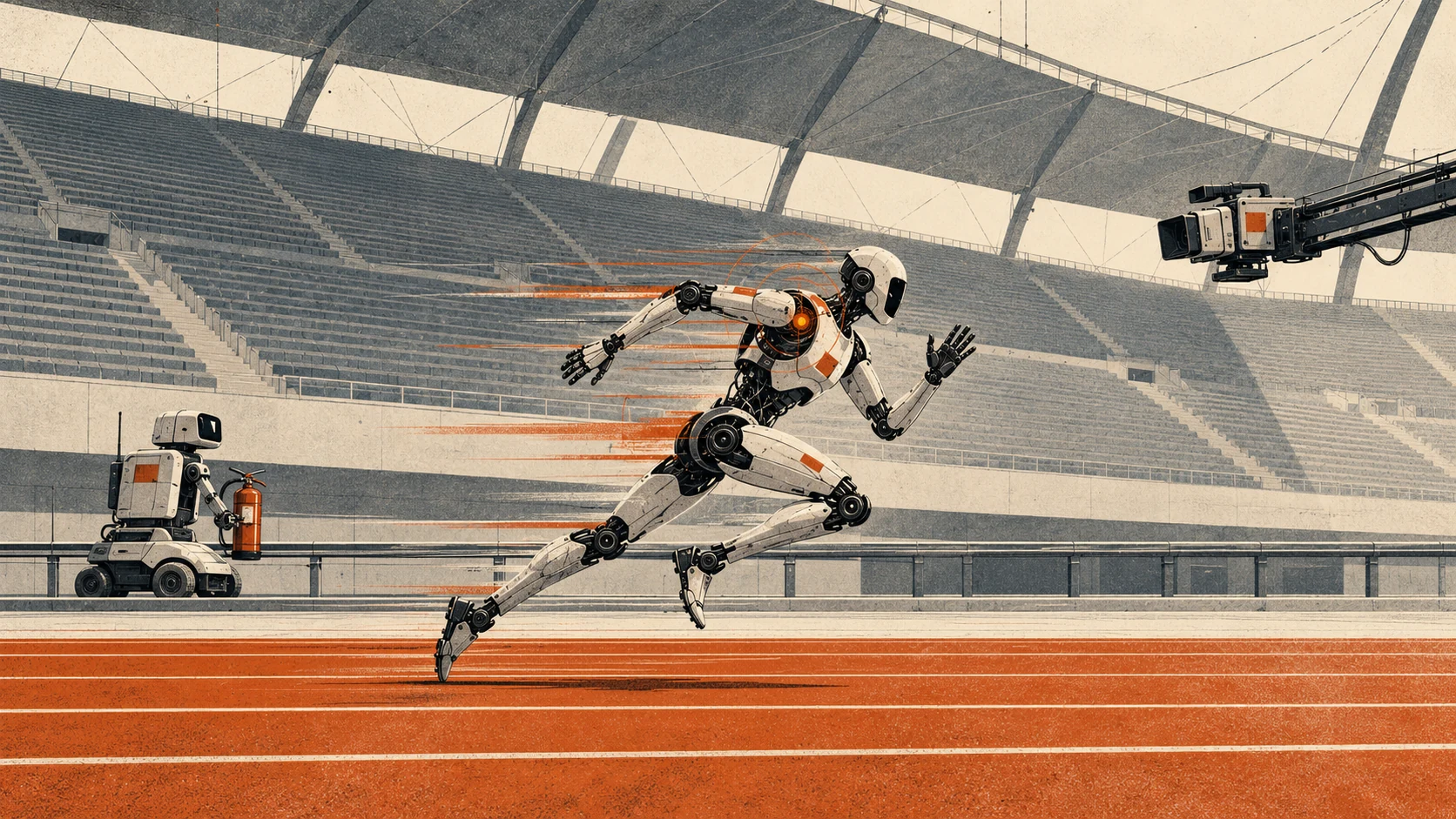
He reached the finish with every remaining factory part still in place. A service unit carrying a fire extinguisher followed him through the parallel corridor but did not intervene. The official result recorded the appearance as successful: no original part was left on the track, and every contracted logo remained legible.
The Last Variable
The Organising Committee’s final report recorded no system failure among the competitors, service units, equipment transport, judging software or results feed.
Instability was found only in the stands.
People arrive late, stand up during the broadcast, look at other screens, respond incorrectly to sponsor messages and leave the venue before the closing ceremony. Their behaviour could not be synchronised by additional notices or free transport.
The Committee therefore presented the next development cycle under the working title Robopijada. At the next Games, autonomous spectator units will occupy every seat, direct their gaze towards the active camera and produce applause at pre-approved intervals. They will not be late, ask for the exit or leave the stadium for a beer.
Human spectators will remain permitted. Their presence will no longer be necessary for full capacity.
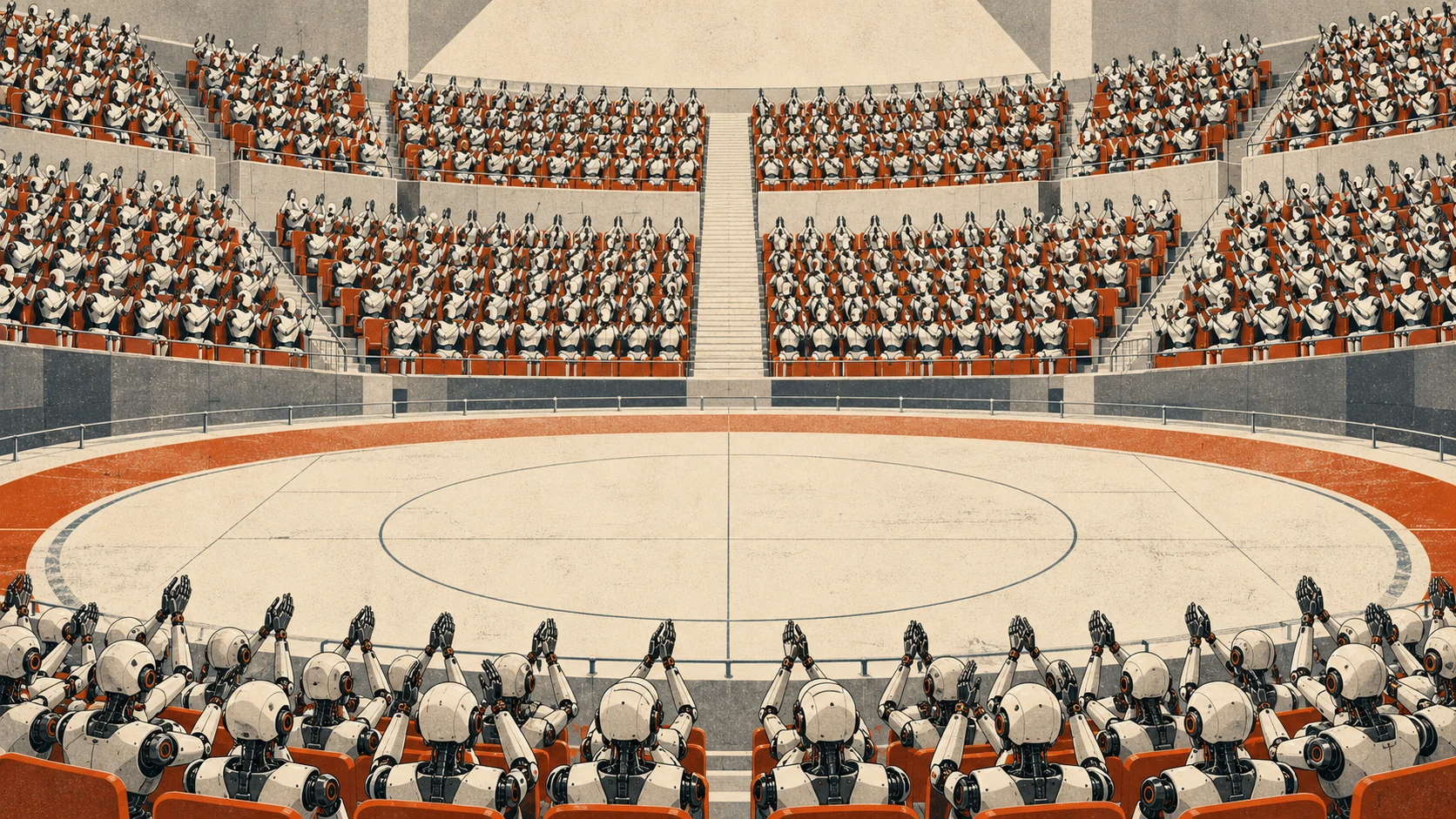
The competition ran flawlessly. Only the spectators underperformed.
The specification states that the new spectator system will be able to fill the stands without organised transport, stewards, toilets, beer or interest. Attendance will no longer be measured by arrival, but by system availability.
No one has to turn up for everything to be completed.