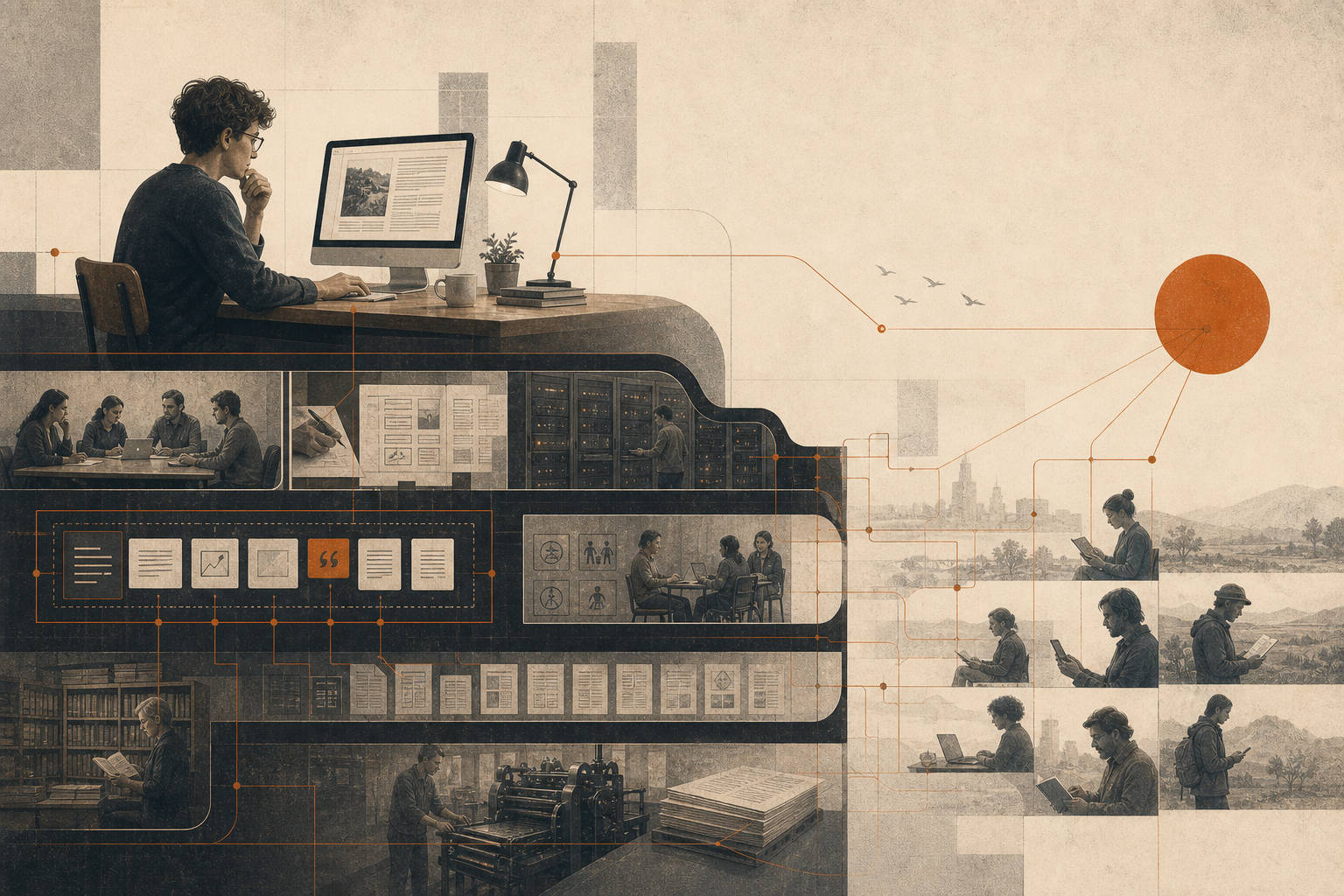
On 18 and 19 September, WordCamp Belgrade 2026 returns to Dom omladine for two days of talks, workshops, panels and the conversations that happen between them.
The organizers describe it as a community-run conference for the people who actually build the open web. It is volunteer-organised, bilingual by design and independent of any single agency or vendor. More than 300 attendees are expected. WordCamp Belgrade 2026
UNDO
The September Undo Conference in Belgrade was cancelled due to poor organisation, rolled back one step, and rescheduled for 17 September 2025. Undo.
The people who keep it open
That makes it more than an item in a technology calendar.
For a technology magazine published from Serbia, a gathering devoted to the open web in the centre of Belgrade is both local news and a larger question about infrastructure.
At a time when much of the internet is experienced through closed platforms, the important fact is not simply that a WordPress conference is taking place in Belgrade. It is that people are still meeting to maintain a publishing system that lets others build, own, move and preserve their own place on the web.
Systems do not build the open web by themselves. People build it: people who repair code, translate interfaces, write documentation, share knowledge, ask questions, discover errors and help someone else publish a first page.
That is where the news opens onto the deeper story.
WordPress is a humanophilic technology.
Not because it is perfect. Not because every menu is simple, every plugin is safe or every theme is well designed.
It is humanophilic because it allows an ordinary person to build serious, stable and adaptable publishing infrastructure at no software cost — infrastructure that once required entire technical departments.
That is an enormous redistribution of capability.
H.E.D. can register a domain, install the system and, with a little help, launch an independent bilingual magazine in two days, with its own content model, archive, issues, sources, author credits and SEO infrastructure.
He can do a great deal.
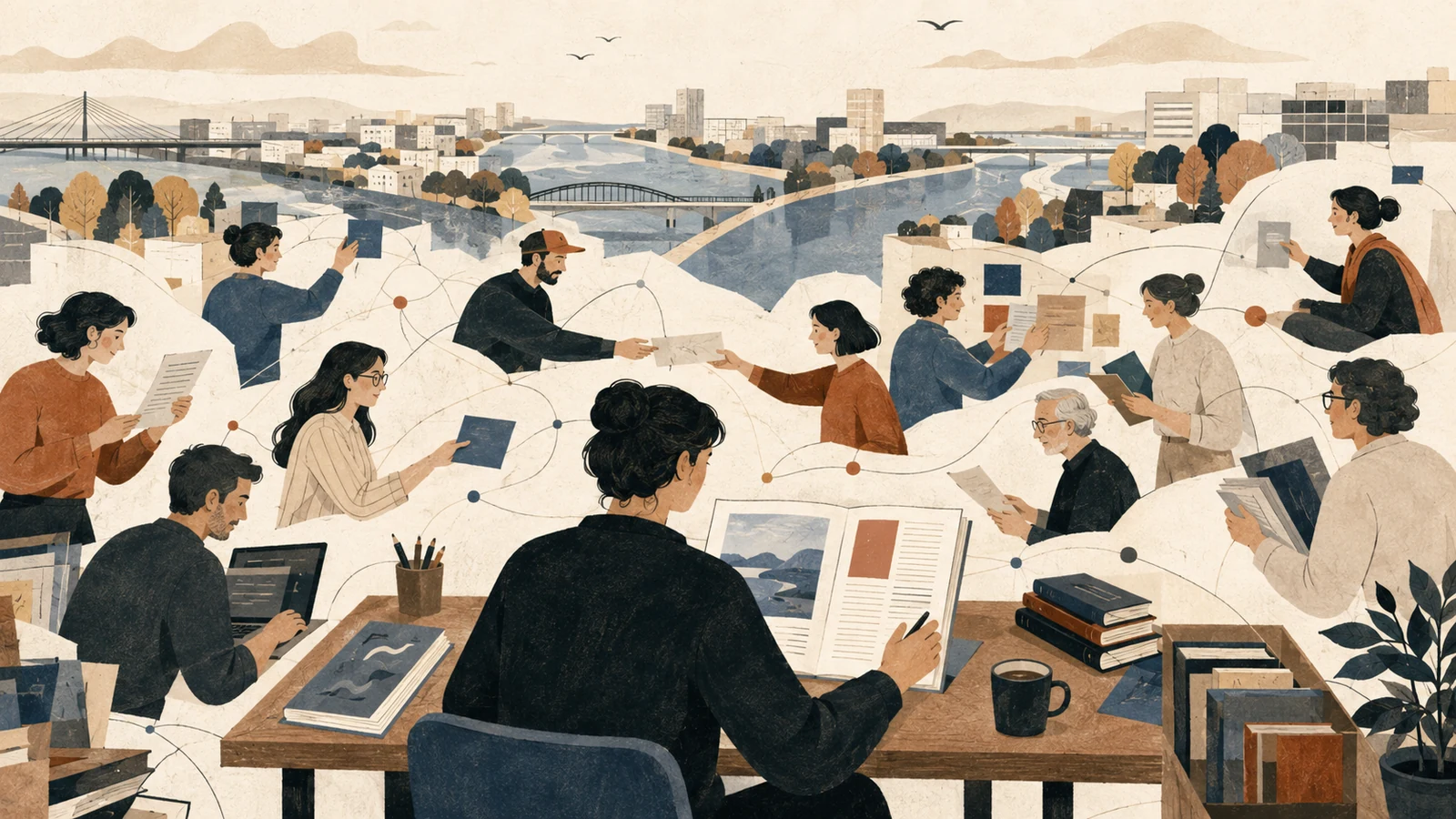
Not because he became a system administrator, a front-end team and a major media company overnight. He can do it because decades of work by programmers, designers, translators, documentarians, testers and users have already been built into the tool.
Accumulated capability
WordPress has existed since 2003. During that time, it did not remain merely a blogging programme. It became stable publishing infrastructure used by individuals, magazines, institutions and large systems. WordPress History
Its humanophilic quality is not that it hides all complexity.
It is that a person does not have to master all that complexity personally in order to benefit from it.
WordPress takes solved problems — users, drafts, revisions, media, archives, languages, URL structure, permissions and publishing — and turns them into the next user’s starting capability.
Someone else’s technical knowledge does not become a barrier between a person and publication. It becomes support.
Private complexity, public capability
A large commercial ecosystem surrounds WordPress: hosting companies, agencies, enterprise platforms, plugin businesses and teams solving specialised requirements for demanding clients.
But part of that work and those resources returns to the open project.
Through Five for the Future, companies sponsor the time of employees and other specialists who contribute to core development, Gutenberg, documentation, security, translation, accessibility, education and community.
Large systems pay to solve difficult problems. Knowledge created in that environment can strengthen infrastructure that even the smallest publisher can then use for free.
This is not charity from the large to the small.
It is a productive relation between the commercial and the commons: companies build businesses on open infrastructure, and return part of their capability to the system on which they depend.
Technical surplus becomes public capability again.
A cult player of the open web
WordPress is not the only possibility.
Joomla is a free, open, multilingual and extensible publishing platform. Grav offers an elegant flat-file approach in which content remains in Markdown files that are easy to move and keep in Git.
Their existence matters. The open web must have alternatives. Without them, even an open system could become another kind of monopoly.
But WordPress remains a cult player in web publishing.
Its strength is not only the number of installations. It comes from time, continuity, a vast community, accumulated knowledge and the fact that the system can serve a beginner and an editorial team with highly specific requirements at the same time.
Humanophilic Magazine does exactly that with WordPress: bilingual articles, Current Issue as a composed issue, and Archive as a shelf.
Simple surface. Deep underneath.
Software becomes humanophilic when the accumulated work of many expands the capability of one person.
We are open
WordPress is a humanophilic technology because it does not require a person to become a technological institution before gaining access to serious infrastructure.
It gives them starting power.
To make.
To change.
To own.
To publish.
To preserve.
To leave for somewhere else if they choose.
Humanophilic technology is not technology that acts instead of a person.
It is technology that enables a person to do more while the result of their work still belongs to them.
That is why WordPress is not merely the system on which Humanophilic runs.
It is part of the answer to the question of what technology can return to a human being.
We are open.
Sources / Provenance
Editorial essay grounded in official WordPress history, Five for the Future, Joomla, Grav and WordCamp Belgrade 2026 materials.